
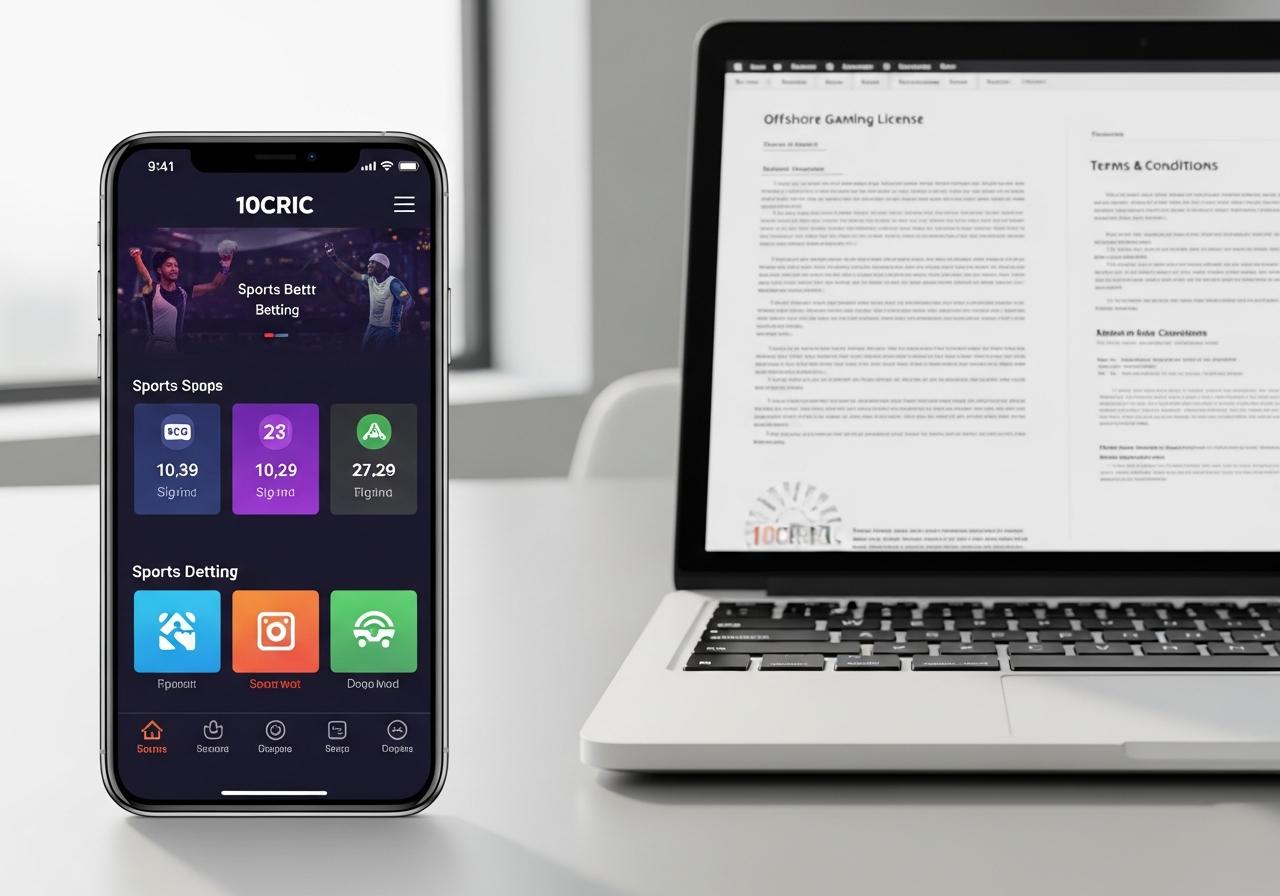
Indian players considering the 10CRIC official app often face confusion about its legal status. The answer is not straightforward: India’s gambling laws are shaped by both federal legislation and state-level regulations, creating a complex legal landscape. While 10CRIC operates under an offshore licence and remains accessible to Indian users, this does not necessarily mean it is unequivocally legal across all Indian states.
Understanding the legality of the 10CRIC app requires distinguishing between three separate issues: the platform’s licensing and operational compliance, its practical accessibility to Indian players, and the legal risk users face in their specific state. Federal law does not explicitly address offshore online betting apps, leaving enforcement and interpretation largely to individual states.
Quick Answer: Is the 10CRIC Official App Legal in India?
The 10CRIC official app exists in a legal gray area for Indian players. It is not explicitly illegal under federal law, but it is also not formally regulated or approved by Indian authorities. The platform holds a Curaçao eGaming licence and operates from an offshore jurisdiction, which allows it to accept Indian customers without violating laws in its country of registration. However, this offshore licensing does not override Indian gambling legislation.
From a practical standpoint, the app is accessible and widely used by Indian players, but legal risk varies significantly depending on the user’s state of residence. Some states have enacted strict prohibitions on online real-money gaming, while others maintain more permissive stances or have not clarified their position. The lack of direct prosecution of individual users in most regions has created a perception of de facto legality, but this is not the same as legal protection.
Ultimately, Indian players need to understand that using the 10CRIC app involves navigating uncertain legal terrain. Accessibility does not equal legality, and offshore licensing does not guarantee immunity from local law enforcement or payment processing complications.
What Indian players need to know first
The 10CRIC app is not licensed or regulated by any Indian authority, meaning it operates outside the country’s direct legal framework. India’s Public Gambling Act of 1867 does not explicitly mention online or app-based gambling, creating ambiguity that both operators and users have interpreted in different ways. Some legal experts argue that offshore platforms fall outside the scope of this outdated legislation, while others contend that any form of real-money gambling not expressly permitted is prohibited.
State-specific laws add another layer of complexity. States like Telangana, Andhra Pradesh, Tamil Nadu, and Karnataka have enacted their own online gambling bans, making the use of apps like 10CRIC potentially illegal for residents. Conversely, states such as Sikkim and Goa have more liberal approaches, though these typically apply to state-licensed operators rather than offshore platforms.
Before using the 10CRIC app, Indian players should verify the current legal status in their state, understand that offshore licensing does not provide legal cover under Indian law, and be aware that payment processors and internet service providers may block access to betting platforms without notice.
Why legality is not the same as availability
The fact that Indian players can download and use the 10CRIC app does not mean the platform is legally sanctioned. Offshore betting operators frequently exploit the ambiguity in Indian law by basing their operations in jurisdictions with established online gambling frameworks, such as Curaçao, Malta, or the Isle of Man. These licences allow the operator to function legally in its own jurisdiction, but they carry no weight under Indian law.
Accessibility is maintained through a combination of direct APK downloads, app store listings in certain regions, and mirror sites that bypass local restrictions. Indian internet service providers occasionally block gambling domains, but operators respond by launching alternative URLs and distributing app installers outside official app stores. This cat-and-mouse dynamic creates a perception of normalcy that can mislead users about the legal risks they face.
The offshore licensing model also limits consumer protection for Indian players. If disputes arise over withdrawals, account suspensions, or bonus terms, players have limited recourse through Indian courts or regulatory bodies. They must rely on the operator’s own complaint procedures or the distant oversight of the Curaçao eGaming Authority, which has limited enforcement power over player-operator disputes.
How 10CRIC Is Licensed and Operated
10CRIC operates under a Curaçao eGaming licence, one of the most common offshore gambling jurisdictions for operators targeting Asian markets. The platform is managed by a company registered outside India, which allows it to offer sports betting and casino games to international customers without holding licences in each individual market.
This licensing structure is designed to provide legitimacy in the operator’s home jurisdiction while sidestepping the need for direct approval from regulators in user countries like India. The Curaçao licence requires the operator to meet certain standards for game fairness, payment security, and responsible gambling, but enforcement is less rigorous than in jurisdictions like the UK or Malta.
| Factor | What it means for Indian players |
|---|---|
| Curaçao eGaming licence | Provides legal cover for the operator in its own jurisdiction, but no protection under Indian law |
| Offshore company registration | Limits accountability and makes dispute resolution difficult through Indian legal channels |
| No Indian regulatory oversight | Platform is not monitored or approved by Indian authorities; consumer protections are minimal |
| Focus on Asian markets | Site design, payment methods, and customer support are tailored to Indian users despite legal ambiguity |
| Third-party payment processors | Transactions may be flagged or blocked by Indian banks; payment routing can be opaque |
Offshore licence and jurisdiction explained
Curaçao is a popular licensing jurisdiction for online gambling operators because it offers a relatively low-cost, single-licence model that covers sports betting, casino games, and live dealer products. The regulatory framework is less stringent than in European jurisdictions, which appeals to operators targeting markets with unclear legal frameworks, such as India.
However, Curaçao licensing has significant limitations. The regulatory body does not conduct regular audits of operator finances, game fairness testing is often delegated to third-party labs without strict oversight, and player complaint resolution is slow and inconsistent. For Indian players, this means that if 10CRIC fails to honor a withdrawal or disputes a win, there is no fast, enforceable remedy through the Curaçao regulator.
Under Indian law, the Curaçao licence carries no weight. Indian courts and regulators do not recognize offshore gambling licences as legal authorization to offer services to Indian residents. This disconnect means that while 10CRIC may be compliant in its home jurisdiction, it operates in a legal void from the perspective of Indian law, exposing users to potential risks if enforcement priorities change.
What Indian Gambling Law Says About the App
Indian gambling law is a patchwork of federal legislation and state-level statutes, none of which were designed with modern online and mobile betting in mind. The central piece of federal law is the Public Gambling Act of 1867, which prohibits operating a gambling house but does not explicitly address online platforms or user participation. The Information Technology Act of 2000 regulates online activity but does not specifically outlaw offshore gambling apps.
This creates a legal gray area: while operating an online gambling platform within India is clearly prohibited, using an offshore platform is not explicitly criminalized at the federal level. However, individual states have the authority to enact their own gambling laws, and several have passed legislation that directly or indirectly targets online real-money gaming.
| Rule area | Implication for 10CRIC app | Impact on Indian players |
|---|---|---|
| Public Gambling Act, 1867 | Does not explicitly cover online gambling; primarily targets physical gambling houses | No direct prohibition on using offshore apps, but no legal protection either |
| Information Technology Act, 2000 | Regulates online content but does not specifically ban offshore betting platforms | ISPs may block gambling sites under government orders, but user prosecution is rare |
| State gambling laws | Some states have explicit bans on online gambling; others have not legislated on the issue | Legal risk depends heavily on state of residence; enforcement varies widely |
| Payment processing regulations | RBI guidelines restrict banks from processing gambling transactions | Deposits and withdrawals may be blocked or flagged; accounts can be frozen |
| Foreign Exchange Management Act (FEMA) | Restricts foreign exchange for prohibited activities, though enforcement on small transactions is limited | Large or frequent transactions to offshore gambling sites could trigger scrutiny |
Federal rules and online money gaming
At the federal level, India has no comprehensive online gambling law. The Public Gambling Act is over 150 years old and was written to regulate physical betting houses and lotteries. Legal scholars disagree on whether this law can be applied to modern online gambling, particularly when the platform operates entirely outside India’s borders.
The IT Act gives the government authority to block websites deemed harmful or illegal, and betting sites are periodically added to ISP blocklists. However, this does not amount to a criminal prohibition on users. There are virtually no recorded cases of individual Indian bettors being prosecuted solely for using an offshore app like 10CRIC, though this could change if enforcement priorities shift.
A significant challenge for users is payment processing. The Reserve Bank of India has issued guidelines discouraging banks from facilitating gambling transactions, leading many Indian banks to block payments to known betting sites. This creates practical barriers even when direct legal prohibition is absent. Players often resort to e-wallets, cryptocurrency, or payment aggregators to bypass these restrictions, which adds another layer of complexity and risk.
State-by-state restrictions that change the answer
The legal status of the 10CRIC app varies considerably depending on where in India you reside. State legislatures have the constitutional authority to regulate gambling within their borders, and several have enacted laws that either explicitly or implicitly ban online betting.
- Telangana and Andhra Pradesh: Both states have passed laws explicitly banning online gambling, including skill-based games and sports betting. Using the 10CRIC app in these states carries higher legal risk, though enforcement has focused more on operators and payment facilitators than individual users.
- Tamil Nadu and Karnataka: These states have introduced or amended gambling laws to include online platforms. While enforcement remains inconsistent, residents face potential penalties if caught using offshore betting apps.
- Sikkim and Goa: These states have more liberal gambling regimes and have licensed certain forms of online gaming, though these licences apply to state-approved operators, not offshore platforms like 10CRIC.
- Maharashtra, Delhi, and West Bengal: These states have older gambling laws that do not specifically address online betting, creating ambiguity. In practice, offshore app use is common, but legal clarity is lacking.
- Most other states: The majority of Indian states have not updated their gambling laws to address online platforms, leaving users in a gray area where the law is unclear and enforcement is rare.
Can Indian Players Download and Use the Official App?
Despite the legal uncertainties, Indian players can access the 10CRIC official app through multiple channels. The platform is not available on the Google Play Store or Apple App Store in India due to those companies’ policies against real-money gambling apps in restricted markets. Instead, 10CRIC distributes its app via direct APK download for Android users and through alternative methods for iOS users.
The download process is straightforward but requires users to adjust device security settings to allow installation from unknown sources. This introduces potential security risks if users inadvertently download modified or malicious versions of the app from unofficial sites.
- Visit the official 10CRIC website: Navigate to the operator’s homepage using a browser on your mobile device. Ensure you are on the legitimate site to avoid phishing or fake app versions.
- Locate the mobile app section: The site typically features a dedicated mobile or app download page with instructions for Android and iOS users.
- Download the APK file (Android): Click the download link, then enable “Install from Unknown Sources” in your device settings. Install the APK and launch the app.
- Follow iOS instructions (iPhone/iPad): iOS users may need to use a web app or follow specific installation steps provided by the operator, as sideloading apps is more restricted on Apple devices.
- Register or log in: Create an account or sign in with existing credentials. Complete any required KYC verification to enable deposits and withdrawals.
Android, iOS, and APK access flow
Android users have the most straightforward access to the 10CRIC app via APK download. The process involves visiting the official site, downloading the installer file, and granting permission to install apps from sources outside the Play Store. Users should be cautious to download only from the verified 10CRIC domain to avoid counterfeit apps that may steal login credentials or payment information.
iOS users face more restrictions due to Apple’s closed ecosystem. The 10CRIC app is not available in the Indian App Store, and sideloading apps on iOS requires either a developer certificate or the use of a web-based app that runs in Safari. The operator typically provides detailed instructions on its site for iOS installation, but the process is less seamless than on Android.
- For Android: Download the APK, enable unknown sources, install, and launch. Updates must be manually downloaded from the site when available.
- For iOS: Follow the operator’s web app instructions or use a profile-based installation method. Updates may require repeating the installation process.
- For both platforms: Be aware that app updates are not automatic. Users must periodically check the official site for new versions, and delayed updates can expose devices to security vulnerabilities.
- VPN considerations: Some users employ VPNs to bypass ISP blocks, but this can violate the operator’s terms of service and complicate account verification.
Safety, Trust, and Compliance Signals
While the 10CRIC app’s legality is ambiguous, its operational safety and trustworthiness can be evaluated through security features, payment practices, and user feedback. The platform employs SSL encryption to protect data transmission, requires KYC verification for withdrawals, and offers multiple payment methods tailored to Indian users, including UPI, Paytm, and bank transfers.
However, operational safety should not be confused with legal safety. A platform can have strong encryption and responsive customer support while still operating in a legal gray area that leaves users exposed to regulatory or payment processing risks.
| Signal | Positive meaning | Risk or limitation |
|---|---|---|
| SSL encryption | Protects login credentials and financial data during transmission | Does not address legal risk or guarantee data privacy from third parties |
| KYC verification | Reduces fraud and identity theft; required for withdrawals | Sharing ID documents with an offshore operator carries privacy risks |
| Multiple payment methods | Offers UPI, e-wallets, and bank transfers for convenience | Indian banks may block or reverse transactions; payment routing can be unclear |
| 24/7 customer support | Live chat and email support available for technical and account issues | Support cannot resolve legal disputes or enforce rights under Indian law |
| Responsible gambling tools | Deposit limits, self-exclusion, and timeout features help manage risk | Tools are voluntary and not enforced by Indian regulators |
Security features and account verification
10CRIC uses industry-standard SSL encryption to secure user data during login and financial transactions. This protects against interception by third parties during transmission, though it does not prevent the operator itself from accessing user information. The platform also requires users to complete KYC verification before processing withdrawals, which typically involves submitting a government-issued ID and proof of address.
While KYC verification is a standard anti-fraud measure, it does carry privacy implications for Indian users. Sharing personal identification documents with an offshore operator means that data is stored outside Indian jurisdiction, with limited recourse if that data is misused or breached. The operator’s privacy policy governs data handling, but enforcement is difficult for users in India.
Payment security is another consideration. The platform supports encrypted payment gateways and processes transactions through third-party processors, which adds a layer of separation between the operator and users’ bank accounts. However, Indian banks increasingly flag or block transactions to known gambling sites, which can result in failed deposits, frozen accounts, or reversed withdrawals. These operational risks exist independently of the platform’s internal security measures.
Common complaints and risk points
- Withdrawal delays: Users frequently report slow withdrawal processing, particularly when additional KYC verification is requested. Offshore operators may take several days to approve payouts, and payment processing can add further delays.
- Payment method restrictions: Indian banks and payment providers may block transactions to 10CRIC without notice, leaving users unable to deposit or withdraw funds through their preferred methods.
- Account suspensions: The operator reserves the right to suspend accounts suspected of bonus abuse, multiple accounts, or violations of terms of service. Dispute resolution is slow and heavily weighted in favor of the operator.
- Limited legal recourse: If a dispute arises over a withheld withdrawal or disputed bet, Indian users have minimal legal options. The Curaçao regulator offers a complaint mechanism, but it is slow and often ineffective.
- App update issues: Because the app is not distributed through official app stores, users must manually download updates. Missing critical updates can expose devices to security vulnerabilities or cause compatibility issues.
10CRIC App Legality by Indian User Scenario
The legal risk associated with using the 10CRIC app varies depending on the user’s location, transaction volume, and whether they engage in activities that attract regulatory or law enforcement attention. Casual users in permissive states face minimal risk, while high-stakes players in restrictive states or those involved in large financial transactions face greater exposure.
| User scenario | Likely legal risk | Editorial takeaway |
|---|---|---|
| Casual bettor in a permissive state (e.g., Maharashtra, Delhi) | Low; no recorded prosecutions of individual users; mainly payment processing risks | Proceed with caution; understand that legal ambiguity remains |
| User in a restrictive state (e.g., Telangana, Andhra Pradesh) | Moderate to high; state laws explicitly ban online gambling; enforcement varies | High risk; consider legal advice before using offshore apps |
| High-stakes player with frequent large transactions | Moderate; large transactions may trigger bank scrutiny or FEMA-related issues | Increased financial and legal exposure; payment disruptions likely |
| User sharing account or using VPN to bypass restrictions | High; violates operator terms of service; risks account suspension and fund forfeiture | Avoid; terms violations reduce already limited consumer protections |
| User in a state with unclear or outdated gambling laws | Low to moderate; legal gray area; enforcement unlikely but not impossible | Understand that lack of enforcement is not the same as legality |
Who faces the highest risk
Users in states with explicit online gambling bans—such as Telangana, Andhra Pradesh, Tamil Nadu, and Karnataka—face the highest legal risk. While individual prosecutions remain rare, the legal framework in these states clearly prohibits online betting, and enforcement could intensify if political or regulatory priorities shift. Players in these states should be aware that using the 10CRIC app directly contradicts state law, even if offshore operators claim legality based on their own licensing.
High-stakes players and those conducting frequent or large transactions also face elevated risk, not necessarily from criminal prosecution but from financial scrutiny. Banks may freeze accounts or reverse transactions if they detect gambling-related activity, and large foreign exchange movements can attract attention under FEMA regulations. These financial disruptions can be costly and time-consuming to resolve, even if no criminal charges are filed.
Finally, users who violate the operator’s terms of service—such as by using VPNs to bypass geo-restrictions, maintaining multiple accounts, or engaging in bonus abuse—face the risk of account suspension and fund forfeiture. In these cases, the operator has broad discretion to terminate accounts, and users have limited recourse through either the offshore regulator or Indian courts.
How This Article Should Differ From Competitors
Many existing articles on 10CRIC app legality fall into one of two camps: they either declare the app fully legal based on its offshore licence, or they label it outright illegal under Indian law. Both approaches oversimplify a complex legal landscape. This article aims to provide nuanced, state-specific guidance that acknowledges the gray areas and empowers Indian players to make informed decisions based on their individual risk tolerance and location.
Competitor content often prioritizes download instructions, bonus promotions, and feature comparisons, relegating legal discussion to a brief disclaimer. This article inverts that priority, leading with legal clarity and treating practical access as secondary. The goal is to give readers the information they need to assess their personal legal exposure, rather than simply facilitating account sign-ups.
- Prioritizes legal clarity and state-specific risk assessment over generic download instructions
- Distinguishes between offshore licensing, practical accessibility, and legal compliance under Indian law
- Provides detailed tables comparing legal implications by user scenario and state-level restrictions
- Focuses on consumer protection gaps and dispute resolution limitations for offshore platforms
- Avoids promotional language and bonus-focused content that misleads users about legal risks
Content gaps in top-ranking competitor pages
Top-ranking competitor pages on 10CRIC legality tend to either understate or overstate the legal risks. Some claim the platform is fully legal for Indian players because it holds a Curaçao licence, ignoring the fact that offshore licensing carries no weight under Indian law. Others declare it illegal across all of India, failing to acknowledge the federal-state divide and the lack of enforcement against individual users in many regions.
Most competitor content also lacks state-specific guidance. India’s gambling laws vary widely from state to state, but many articles treat the country as a monolith, providing a single yes-or-no answer that does not reflect the nuanced legal reality. This leaves readers without the information they need to assess their personal risk based on where they live.
Finally, competitor pages often bury legal discussion beneath layers of promotional content about bonuses, payment methods, and app features. This structure suggests that legality is an afterthought rather than a primary concern, which can mislead users into underestimating the risks they face.
Unique angle to win the snippet
This article is structured to deliver a clear, upfront verdict followed by detailed explanations of the factors that shape legality for different users. By leading with a concise answer that acknowledges the gray area and then breaking down federal law, state law, offshore licensing, and user scenarios, the content provides both immediate clarity and comprehensive depth.
The use of comparison tables for state-level restrictions, user scenarios, and compliance signals makes complex legal information scannable and actionable. This structured approach, combined with a focus on legal exposure rather than promotional messaging, positions the article to capture featured snippets and answer boxes for queries like “Is 10CRIC legal in India” and “Can I use 10CRIC app in [state name].”
Recommended On-Page Structure and UX Elements
To maximize clarity and user engagement, this article employs a structured approach that combines verdict-first answers, comparison tables, and state-specific guidance. The layout is designed to serve both users seeking quick answers and those who need detailed legal context.
| Element | Purpose |
|---|---|
| Quick verdict section at the top | Provides immediate answer for users seeking a fast legal assessment |
| Comparison tables for legal rules and user scenarios | Makes complex legal information scannable and easier to understand |
| State-by-state restriction lists | Helps users assess personal risk based on their location |
| Legal disclaimer or editor’s note | Clarifies that content is informational, not legal advice |
| Mobile-optimized tables and lists | Ensures readability on smartphones, where most users access betting content |
Best supporting blocks for readability
- A verdict block at the top of the article that summarizes the legal status in 2–3 sentences, optimized for featured snippets
- Comparison tables that break down federal vs. state law, offshore licensing vs. Indian regulation, and user scenarios by risk level
- Bulleted lists for state-specific restrictions and common user complaints, making information easy to scan
- Step-by-step download instructions presented as ordered lists, focused on practical access without promotional language
- A legal disclaimer box at the end reminding users that the article is for informational purposes and recommending consultation with a legal professional for specific advice
Suggested Closing Angle
The legal status of the 10CRIC official app for Indian players is best understood as a gray area shaped by outdated federal law, inconsistent state-level regulation, and the realities of offshore licensing. The app is not explicitly legal under Indian law, nor is it clearly illegal in all states. For most users, the practical risks center on payment processing disruptions, limited consumer protection, and the possibility of legal exposure in states with strict online gambling bans.
Indian players considering the 10CRIC app should assess their personal risk based on their state of residence, the size and frequency of their transactions, and their comfort with operating in a legal gray area. While prosecution of individual users remains rare, the lack of enforcement should not be mistaken for legal approval. Offshore licensing provides the operator with legitimacy in its own jurisdiction but offers no protection or recourse for Indian users under local law.
Final editorial stance
This article takes the position that Indian players deserve clear, honest information about the legal risks they face when using offshore betting apps like 10CRIC. Rather than declaring the app universally legal or illegal, we acknowledge the complexity of India’s gambling laws and the wide variation in risk across different states and user scenarios.
Users in states with explicit online gambling bans should be aware that using the app contradicts state law, even if enforcement is inconsistent. Those in permissive or ambiguous jurisdictions face lower legal risk but should still understand that offshore platforms offer limited consumer protection and that payment processing can be disrupted at any time. Ultimately, the decision to use the 10CRIC app is a personal one that should be made with full awareness of the legal, financial, and operational risks involved.